
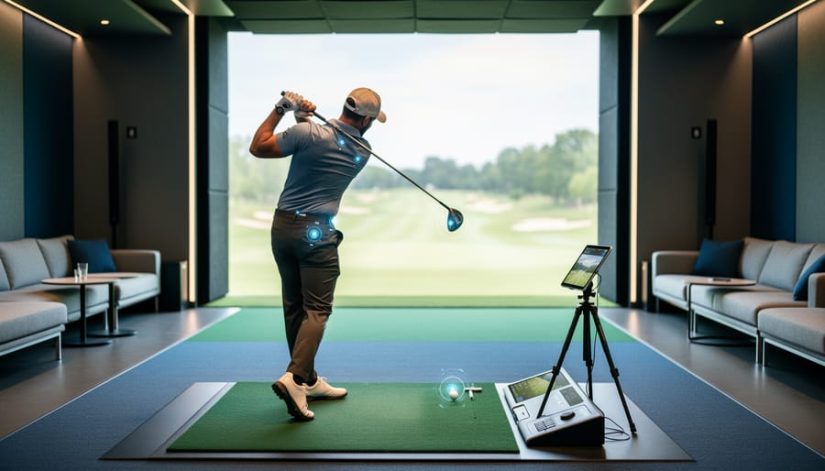
Golf tech lessons are modern golf instruction sessions enhanced by digital tools like launch monitors, video analysis software, motion sensors, and 3D swing tracking systems that provide precise, data-driven feedback on every aspect of your game. Instead of relying solely on an instructor’s eye and experience, these lessons pair expert coaching with measurable insights, revealing exactly what your club and body are doing at impact and throughout your swing.
The difference is significant. Traditional lessons depend on observation and feel, while technology-driven instruction gives you numbers: club speed, launch angle, swing path, face angle at impact. That data helps instructors identify problems faster and track improvement with clarity. Major instruction providers like GOLFTEC have built their reputations on this approach, using video analysis and motion measurement technology alongside swing data from the world’s best players to create personalized improvement plans.
Here at The Lakes Golf Club, we’ve embraced this shift through our 3D Golf Center where families and golfers of all skill levels can experience what modern instruction looks like. Whether you’re curious about what these sessions involve, wondering if the technology actually delivers better results, or simply exploring your options for 2026, this guide walks you through how tech lessons work, the tools instructors use, and what you can expect from your first session. The scenic backdrop and welcoming atmosphere make learning easier, but the technology ensures your practice time translates into real progress on the course.
What Golf Tech Lessons Mean for Modern Golfers
Golf tech lessons replace guesswork with measurable evidence. While traditional instruction relies heavily on an instructor’s eye and a golfer’s feel, technology-enhanced lessons capture what actually happens during your swing and what your club does to the ball. Cameras record your motion from multiple angles, sensors track your club path and body rotation, and launch monitors measure ball speed, spin rate, and trajectory. Instead of your instructor saying “I think your swing plane is off,” the software shows you precisely where your club travels through space and how that affects your results.
This data-driven approach transforms vague feedback into specific numbers and images you can understand. When an instructor reviews your swing side-by-side with tour player data, you see exactly what needs to change. The technology identifies patterns you can’t feel: whether your hips rotate too early, if your wrists release too late, or how your grip pressure affects clubface control at impact.
- Swing Analysis
- Software that breaks down your golf swing into measurable components, comparing your mechanics to ideal positions and identifying specific areas for improvement.
- Motion Measurement
- Sensor technology that tracks your body rotation, weight transfer, and joint angles throughout the swing, providing precise data on your physical movements.
- Launch Monitor
- A device that measures ball flight characteristics including speed, launch angle, spin rate, and carry distance, revealing how your swing translates into actual performance.
- Swing Evaluation
- The initial assessment session where instructors use technology to establish baseline measurements of your current swing and identify strengths and weaknesses.
The real advantage comes from creating a personalized improvement plan based on your actual data rather than generic advice. Two golfers might slice the ball for completely different mechanical reasons, and the technology pinpoints which cause applies to you. Progress becomes trackable too. After three lessons, you can compare your current swing metrics against your starting point and see objective proof that your club path has straightened or your impact position has improved. That feedback loop keeps you motivated and ensures practice time targets the right fixes.
How Technology-Enhanced Instruction Works
The Initial Swing Evaluation
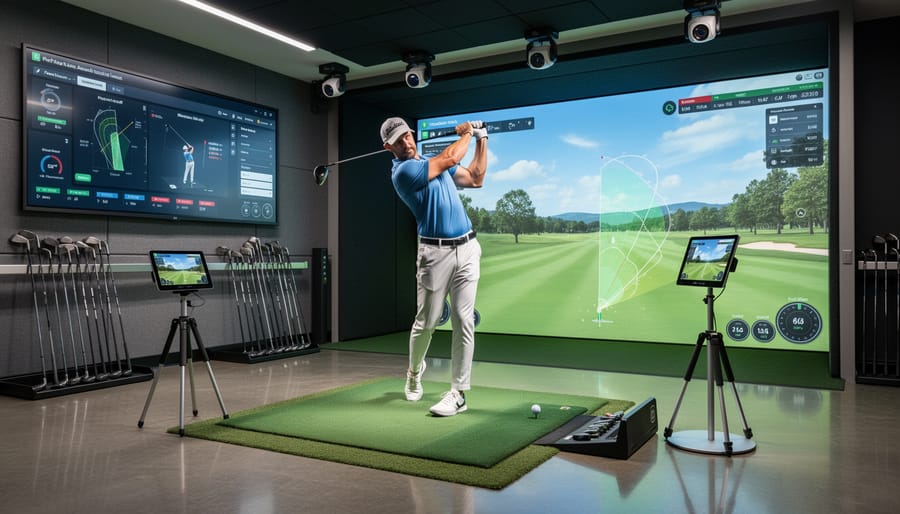
The initial swing evaluation serves as your baseline, a diagnostic snapshot that captures how you currently swing the club before any instruction begins. During this first session, cameras positioned at multiple angles record your swing while motion sensors track specific data points: club speed, face angle at impact, swing path, and how your body moves through each phase. The instructor watches you hit a series of shots with different clubs, collecting measurements that reveal both obvious flaws and subtle inefficiencies you might not feel.
This evaluation isn’t about judgment; it’s about establishing objective starting points. The technology identifies mechanical patterns, perhaps your hips slide rather than rotate, or your club face opens early in the backswing. These measurements create benchmarks: your current average ball speed, launch angle, and consistency metrics. You’ll see video comparison side-by-side with proper mechanics, making abstract concepts like “staying connected” suddenly visual and concrete. The instructor uses this data to prioritize which issues to address first, building a personalized improvement roadmap based on what will have the biggest impact on your game rather than generic advice.
Real-Time Feedback and Adjustments
One of tech-enhanced instruction’s biggest advantages is that you don’t have to wait days or weeks to understand what changed. After you adjust your grip or shift your weight, the system shows you the result immediately, often within seconds of your swing.
High-speed video displays side-by-side comparisons of your before-and-after swings on a large screen. You watch your club path straighten or your hip rotation improve in slow motion while your instructor explains exactly what you did differently. Launch monitors simultaneously display the numbers: ball speed increased by 3 mph, spin rate dropped by 200 rpm, the shot landed 12 yards closer to your target line.
This instant feedback loop transforms practice from guesswork into experimentation. You make a small adjustment, hit a ball, and see whether the change moved you toward your goal or away from it. That clear cause-and-effect connection helps your brain cement the correct movement pattern far faster than traditional trial-and-error.
The technology also prevents you from drifting back into old habits. If you unknowingly revert to your previous swing flaw, the data alerts both you and your instructor immediately, allowing for quick correction before the mistake becomes ingrained again.
Types of Technology Used in Modern Golf Instruction
Modern golf instruction incorporates several key technology categories, each designed to capture specific aspects of your swing and performance. Understanding these tools helps you appreciate how technology-driven lessons can fix your swing issues that are invisible to the naked eye.
The primary technologies used in today’s tech-equipped golf facilities include:
- High-speed video capture systems that record swings from multiple angles, revealing precise positions and movements throughout the swing sequence
- 3D motion tracking sensors that measure body rotation, weight transfer, and posture changes frame by frame
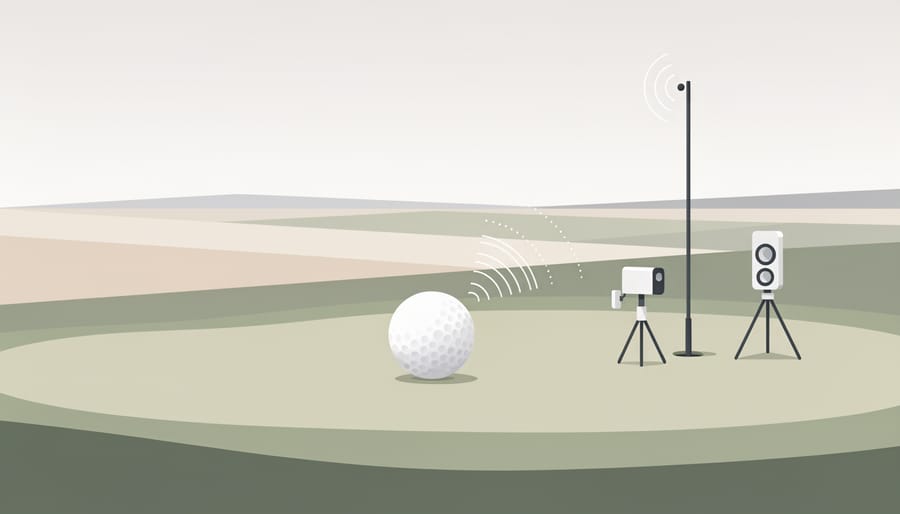
- Launch monitors that track ball speed, spin rate, launch angle, and carry distance for every shot
- Pressure mapping plates that show weight distribution and how force transfers through your feet during the swing
- Custom club fitting systems that combine swing data with equipment variables to optimize club specifications for your mechanics
Video analysis systems form the foundation of most tech lessons. These platforms record your swing in slow motion, often at hundreds of frames per second, and allow instructors to draw lines, measure angles, and compare your positions to those of professional golfers. You can watch yourself side by side with tour players, making abstract coaching concepts immediately visible.
Motion measurement technology takes analysis deeper by tracking three-dimensional movements that video alone can miss. Sensors attached to your body or club measure how fast you rotate, when your hips fire relative to your shoulders, and whether your swing plane stays consistent. This data reveals timing issues and compensations that explain why certain swing thoughts haven’t worked for you.
Launch monitors provide the outcomes side of the equation. They tell you exactly what happened when club met ball, which helps instructors determine whether swing changes are producing better results. Instead of guessing based on ball flight alone, you see precise numbers showing improvement or areas still needing work.
Together, these technologies create a complete picture of your swing mechanics and their effects, allowing instructors at facilities like The Lakes to develop targeted improvement plans based on objective data rather than subjective observation alone.
How Golfers Use Tech Lessons to Improve
Golfers turn to technology-enhanced instruction for a variety of reasons, from breaking through stubborn plateaus to building fundamental skills. Beginners benefit from seeing exactly what their swing looks like on video compared to proper mechanics, making abstract concepts like hip rotation or weight transfer immediately clear. Instead of guessing whether they’re doing it right, they can watch themselves make the correction and see the resulting change in ball flight on the launch monitor.
More experienced players use tech lessons to address specific swing faults that traditional coaching hasn’t resolved. The precision data reveals subtle issues, maybe the club face is two degrees open at impact, or the swing path is slightly outside-in, that explain persistent slices or inconsistent contact. Once the instructor identifies the exact problem through measurement, they can prescribe targeted drills and track progress session by session.
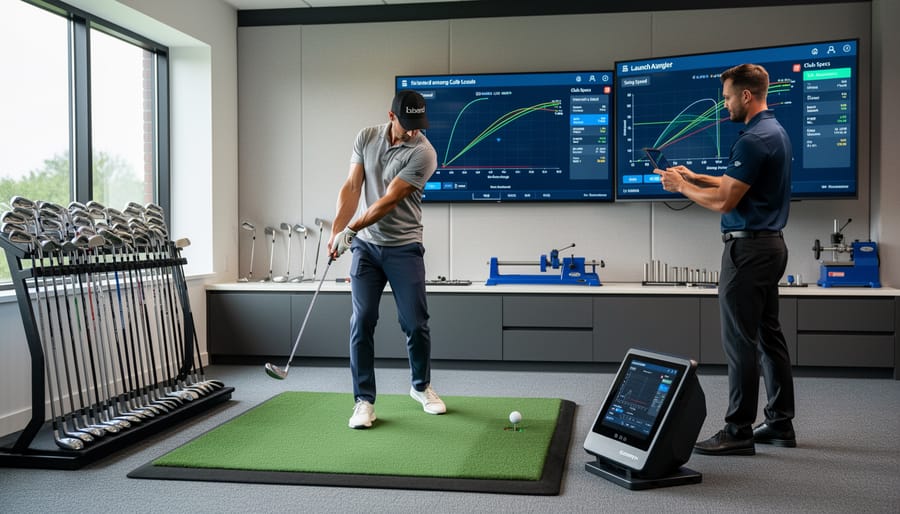
Custom equipment fitting represents another powerful application. When golfers see how different club specifications affect their launch angle, spin rate, and distance, they make informed decisions rather than buying based on marketing claims. A family visiting The Lakes might discover that each member benefits from different club configurations suited to their unique swing characteristics.
Perhaps most valuable is how tech lessons build confidence through objective proof. Golfers see their swing speed increase by measurable amounts, their dispersion pattern tighten, or their consistency improve over time. This concrete evidence motivates continued practice and validates the work they’re putting in. Parents introducing children to golf at The Lakes find that kids stay engaged when they can see their numbers improve, turning practice into a game with clear scores and achievements.
The data also helps golfers understand cause and effect. When they make a swing change and immediately see how it affects their numbers, they grasp why the adjustment matters rather than blindly following instructions.
What to Expect at a Tech-Equipped Golf Facility
Walking into a tech-equipped golf facility is different from a traditional pro shop lesson. You should see dedicated teaching bays or studios outfitted with cameras mounted at multiple angles, floor sensors or mats that track pressure and weight shift, and large monitors displaying swing analysis software. The best facilities employ certified instructors who understand both golf fundamentals and how to translate raw data into actionable advice. Technology captures what’s happening; a skilled coach explains why it matters and how to fix it.
Look for comprehensive practice areas where you can immediately apply what you learn. A driving range, short game area, and putting green let you test adjustments in real conditions rather than just inside a studio. Some facilities offer indoor golf lessons year-round, while others combine indoor analysis with outdoor practice. The Lakes integrates tech instruction seamlessly with its scenic courses, so you can move from lesson to live play and see progress unfold.
Check whether the facility also offers custom club fitting technology. Matching equipment to your swing data maximizes the benefit of instruction. A well-rounded club provides more than just lessons, it creates an environment where technology, expert coaching, and quality practice facilities work together. That combination, available at The Lakes alongside family-friendly amenities and a welcoming atmosphere, turns data into lasting improvement. Some golfers supplement in-person sessions with online golf lessons for ongoing refinement between visits.
Common Questions About Golf Tech Lessons
What is a swing evaluation?
A swing evaluation is the first step in technology-enhanced instruction, where cameras and sensors capture your current swing mechanics to establish baseline measurements. This initial assessment identifies your strengths and weaknesses, creating a starting point for personalized improvement plans.
How does technology improve golf lessons?
Technology removes guesswork by providing objective data about your swing path, club face angle, ball flight, and body movements. This immediate, visual feedback helps you understand exactly what’s happening in your swing and see the direct results of adjustments in real time.
Is tech instruction suitable for beginners?
Yes, tech lessons work exceptionally well for beginners because they establish proper fundamentals from the start. The visual feedback helps new golfers understand correct movements faster than traditional instruction alone, preventing bad habits from forming.
How often should you take tech lessons?
Most golfers benefit from sessions every two to four weeks, allowing time to practice between lessons while maintaining momentum. The frequency depends on your goals, schedule, and how quickly you integrate changes into your game.
Beyond these common questions, golfers often wonder whether technology replaces the human element of instruction. The reality is that tech-enhanced lessons combine data precision with an instructor’s experience and ability to communicate effectively. The technology captures what’s happening, but a certified coach interprets that information, explains why it matters for your specific situation, and creates drills that address your needs.
Cost is another frequent consideration. While technology-enhanced instruction typically costs more than traditional lessons, many golfers find the investment worthwhile because progress happens faster and more consistently. The objective measurements also mean you’re paying for targeted improvement rather than guessing at solutions. At facilities like The Lakes, tech instruction becomes part of a comprehensive golf experience that includes scenic courses and practice areas where you can immediately apply what you’ve learned.
Technology-enhanced instruction represents where golf is headed, and facilities like The Lakes Golf Club are leading that evolution. By combining data precision with expert coaching, tech lessons transform what was once subjective guesswork into clear, measurable improvement. You see exactly what your swing is doing, understand why the ball flies the way it does, and receive a personalized plan built around your specific needs.
This approach makes golf instruction more engaging and effective for everyone, from beginners trying to build solid fundamentals to experienced players chasing lower scores. The objective feedback removes frustration and accelerates progress in ways traditional methods simply can’t match.
At The Lakes, technology-driven instruction fits naturally alongside the scenic courses and welcoming atmosphere families have enjoyed for years. Whether you’re visiting for a weekend round or looking to seriously improve your game, experiencing how modern technology can transform your swing adds a new dimension to your time on the course. The combination of cutting-edge instruction and the club’s beautiful setting creates an environment where improvement feels less like work and more like discovery.