
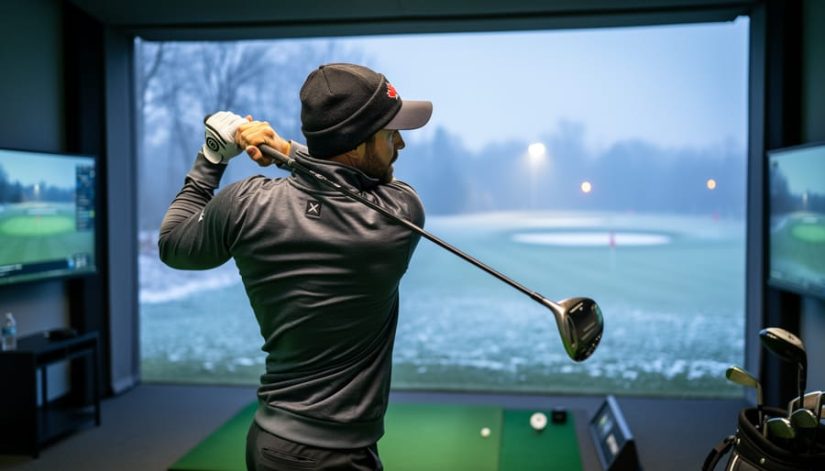
If you’ve searched “northern swing golf,” you’re likely looking for a specific technique or training method that doesn’t actually exist. There’s no established golf methodology called the “northern swing,” but what you’re probably encountering is the evolving landscape of golf instruction and year-round training opportunities that have transformed how Canadians approach the game in 2026.
The confusion is understandable. Golf instruction terminology shifts constantly, and with Canada’s unique climate challenges, many golfers assume there must be a specialized swing technique adapted for colder conditions. The reality is far more interesting: rather than developing a distinct swing method, Canadian golfers have access to an explosion of off-course training options that have changed everything about how the game is taught and practiced throughout the year.
Golf Canada launched its comprehensive Just Swing campaign in November 2025, recognizing that traditional seasonal limitations no longer define the Canadian golf experience. Indoor simulators, virtual reality training, driving ranges with heated bays, and sophisticated short game facilities now complement traditional green grass golf. As Golf Canada puts it, “There is no such thing as an off-season in golf” anymore.
This shift matters because it directly addresses what northern golfers have always grappled with: maintaining skills and improvement through long winters. Instead of searching for a mythical cold-weather swing technique, today’s Canadian golfer can choose between traditional outdoor instruction during the playing season and increasingly sophisticated year-round training environments. Understanding these options, and how to blend them effectively, is what separates golfers who plateau from those who continue improving regardless of the weather outside.
At-a-Glance: Golf Training Approaches for Canadian Golfers
Canadian golfers searching for modern training methods will encounter two primary approaches: traditional green grass play and contemporary year-round training facilities. Traditional courses operate seasonally, typically May through October in most regions, offering authentic on-course experiences with natural conditions and full 18-hole layouts. Modern training facilities, which have exploded across Canada since Golf Canada’s Just Swing campaign launched in November 2025, provide year-round access through simulators, driving ranges, and indoor practice areas.
| Training Approach | Seasonal Access | Technology Integration | Ideal Use Cases |
|---|---|---|---|
| Traditional Green Grass Golf | May, October (weather dependent) | Minimal; natural course feedback | Full game experience, social rounds, competitive play |
| Modern Year-Round Training | 12 months per year | Simulators, launch monitors, video analysis | Winter practice, swing refinement, quick sessions |
These approaches complement rather than compete with each other. Golf Canada emphasizes that off-course options including simulators, short game areas, and virtual reality golf provide year-round experiences while traditional courses like The Lakes Golf Club deliver the scenic, full-length play that defines Canadian golf. Most serious players now blend both methods, using winter months for technical work and summer for on-course application.
Understanding Golf Training Terminology and Approaches
When golfers search for “northern swing golf,” they’re likely encountering an unfamiliar phrase and seeking clarity on golf instruction options available in Canada’s climate. The term itself isn’t a recognized golf methodology, there’s no distinct “northern swing” technique taught by certified instructors. Instead, what Canadian golfers are finding is a transformed landscape of year-round training approaches and modern instruction methods that have evolved to serve players through all seasons.
The golf industry uses specific terminology to describe these training environments and instructional approaches:
- Traditional Green Grass Golf
- Outdoor play on full-length courses during the warmer months, typically April through October in most of Canada, offering the complete experience of reading natural terrain and weather conditions.
- Off-Course Golf
- Training and play experiences that happen away from traditional courses, including simulators, driving ranges, and short game facilities that extend practice opportunities beyond the seasonal limitations of outdoor courses.
- Golf Simulators
- Indoor technology that projects virtual courses and provides detailed swing data, allowing golfers to practice and play year-round regardless of weather conditions.
- Modern Swing Instruction
- Teaching methods that incorporate video analysis, launch monitor data, and biomechanical feedback to help golfers understand and improve their technique through measurable metrics.
- Year-Round Golf Training
- The philosophy that skills can be developed continuously through a combination of on-course play, indoor facilities, and golf tech lessons that keep players engaged during Canada’s winter months.
- Just Swing Campaign
- Golf Canada’s comprehensive off-course golf strategy launched in November 2025 to promote the explosion of simulator facilities, driving ranges, and alternative golf experiences across Canada.
The confusion around “northern swing” likely stems from golfers hearing about modern instruction methods, simulator-based training, and year-round facilities that have become increasingly common in Canadian cities. These aren’t alternative swing techniques but rather diverse training environments that complement traditional course play, helping golfers maintain and improve their skills when outdoor courses close for the season.
Traditional Green Grass Golf: The Classic Canadian Experience
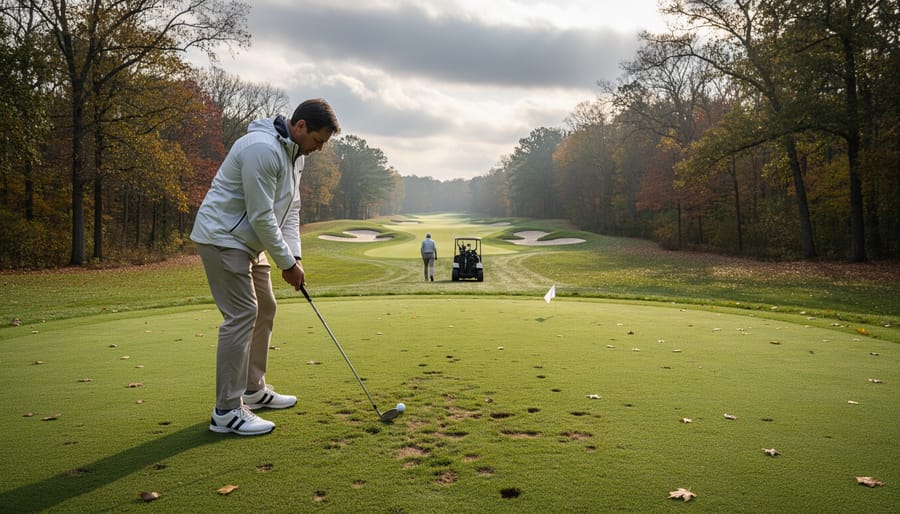
Traditional outdoor golf in Canada offers an experience that can’t be replicated indoors. When you step onto a well-maintained course during the playing season, you’re facing real terrain, reading natural slopes, and adjusting for actual wind conditions. The sound of a properly struck iron, the feel of turf beneath your feet, and the challenge of navigating water hazards and bunkers create the complete golf experience that has defined the game for centuries.
The Canadian golf season typically runs from April through October, depending on your location. This compressed timeframe means golfers make the most of every available day when conditions allow. Unlike year-round indoor facilities, traditional courses close when snow arrives, reopening only after spring thaw and course preparation. This seasonal rhythm has shaped how Canadian golfers approach the game, with many embracing off-course training options during winter months to maintain their skills.
Premier facilities like The Lakes Golf Club deliver authentic on-course experiences that showcase the best of Canadian golf. These clubs maintain championship-caliber conditions, offer natural challenges that test every aspect of your game, and provide the social atmosphere that makes golf a lifetime pursuit. You’re not just hitting balls into a screen; you’re managing an actual round, making strategic decisions based on course layout, and experiencing the satisfaction of a well-played hole.
Traditional green grass golf remains the gold standard for several reasons. Course management skills develop only through repeated play on varied layouts. Shot-shaping ability improves when you must work the ball around trees and adjust for elevation changes. The mental game strengthens when you face consecutive holes with different challenges and no reset button.
Modern Off-Course Golf Training: Year-Round Options
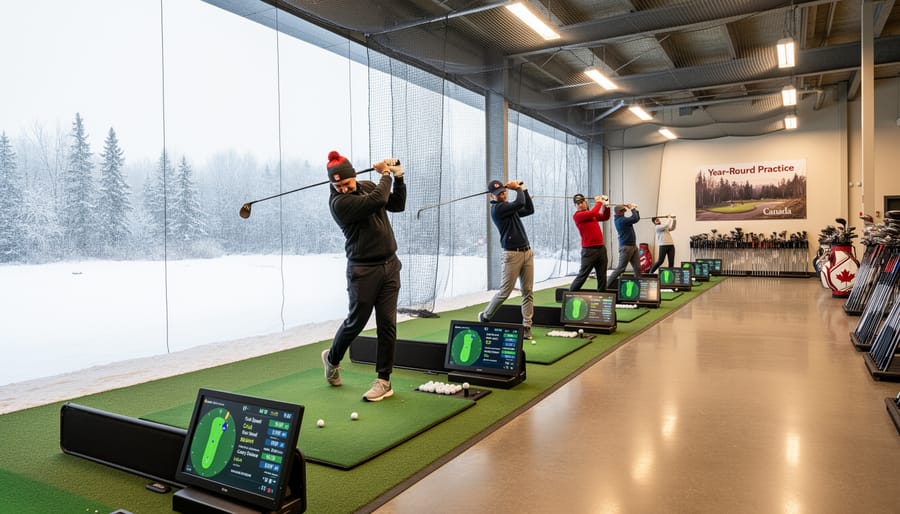
Since Golf Canada’s off-course strategy launched in November 2025, Canadian golfers have access to a dramatically expanded array of year-round training options. These facilities help maintain and develop skills during winter months, though they serve a fundamentally different purpose than playing a full round at The Lakes Golf Club on a summer afternoon.
Golf simulators have exploded across Canada, offering data-rich practice sessions where launch monitors track every metric of your swing. High-speed cameras capture club path and face angle at impact, letting you diagnose issues that would remain invisible on an outdoor range. The 3D Golf Center exemplifies this technology-driven approach, providing instant feedback that accelerates learning.
Indoor golf lessons at these facilities pair technology with professional instruction, making January as productive as July for skill development. Golf Canada identifies multiple off-course experiences that complement traditional play:
- Golf simulators offering virtual rounds and swing analysis in climate-controlled environments
- Driving ranges with heated bays and ball-tracking technology for precise distance work
- Short game areas focusing on putting, chipping, and bunker play fundamentals
- Mini golf providing casual, family-friendly introduction to the sport
- Virtual reality golf creating immersive practice scenarios without leaving the city
- Golf-themed video games building strategic understanding and course management skills
These options don’t replace the experience of reading a breaking putt on natural grass or adjusting for wind across water. They do, however, eliminate the traditional golf off-season. The ClubLink Academy at Glen Abbey, led by coaches like Tim O’Connor, incorporates both simulator training and on-course instruction, recognizing that technology-assisted practice builds the foundation for success when you return to traditional play.
Consider off-course training as strategic preparation rather than a substitute. Winter simulator work on swing mechanics pays dividends when you face that first tee shot at The Lakes in April.
Comparing Your Options: Dimension by Dimension
Year-Round Access and Seasonal Realities
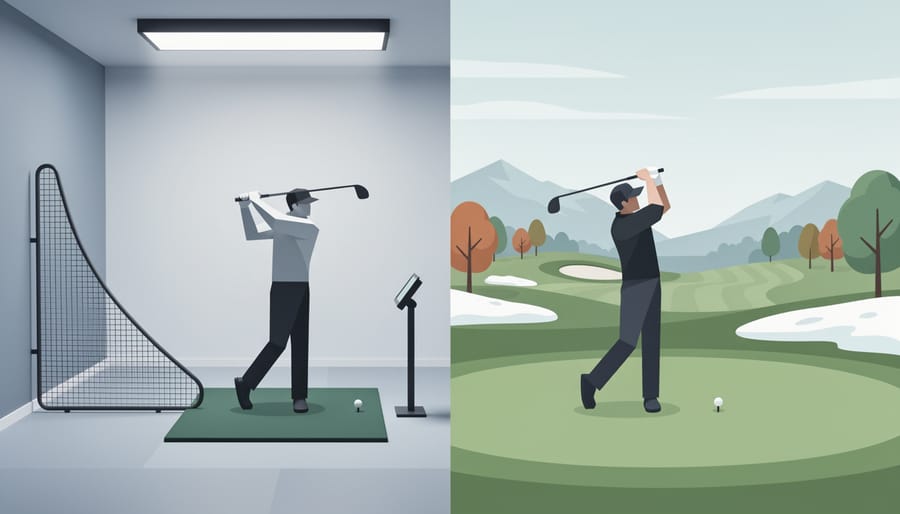
Canadian golfers face a stark seasonal reality that shapes how they approach the game. Traditional courses close when snow arrives, typically shutting down operations from November through March across most provinces. Even shoulder months like April and October bring unpredictable conditions, frost delays, soggy fairways, abbreviated rounds cut short by early darkness. You get roughly six months of reliable outdoor golf, which means your swing can go dormant for half the year.
Indoor facilities have rewritten that calendar entirely. Since Golf Canada launched its year-round off-course options strategy in November 2025, simulators and climate-controlled training centers have exploded across Canada. There genuinely is no off-season anymore if you choose not to take one. You can work on your swing mechanics in January, track ball flight data in February, and arrive at courses like The Lakes, a family-friendly club that maximizes every available playing day, with your game already sharp when the snow melts.
Technology-Assisted Practice vs. Natural Course Conditions
Modern training tools offer immediate performance feedback that was unavailable to previous generations. Launch monitors measure ball speed, spin rates, and attack angles with precision, giving golfers concrete data about their swing mechanics. Simulators and VR golf let you practice in climate-controlled environments year-round, testing shots against virtual replicas of famous courses.
Traditional on-course play teaches different skills. You learn to read slopes and grain on real greens, judge distances without digital assistance, and adjust for wind that shifts mid-swing. Natural terrain presents uneven lies, buried lies in bunkers, and situations no simulator fully replicates. Weather conditions like morning dew or afternoon heat affect ball flight and turf interaction in ways data can’t always predict.
The strongest approach combines both. Use technology to identify swing flaws and track improvement over winter months. Then apply those refined mechanics on actual courses, where you develop course management, shot creativity, and the adaptability that separates good rounds from frustrating ones. Each environment builds complementary capabilities rather than competing for your time.
Coaching Support and Instructional Approaches

Professional instruction plays a crucial role whether you’re playing traditional rounds or training off-course. Programs like the ClubLink Academy at Glen Abbey in Oakville, Ontario, serve golfers of all abilities and ages with structured lesson programs. Coaches such as Tim O’Connor, who joined Glen Abbey as Mental Performance Coach in 2015, bring specialized expertise to help Canadian golfers improve year-round.
Both traditional clubs and modern training centers offer access to qualified instructors, though the setting shapes the lesson format. On-course coaching allows you to work on course management, reading natural conditions, and applying skills in real play situations. Indoor facilities excel at detailed swing analysis using technology, focused practice on specific elements, and year-round consistency regardless of weather.
Golf Canada’s Just Swing campaign, launched in November 2025, supports comprehensive instruction across all golf environments, simulators, driving ranges, short game areas, and traditional courses. Many serious golfers combine both: winter sessions at indoor facilities to refine mechanics, followed by on-course lessons during the season to integrate those improvements into actual play.
Convenience and Accessibility
Convenience plays a decisive role when choosing where and how to practice. Full-service clubs like The Lakes Golf Club require travel time and typically a half-day commitment, teeing off, playing 18 holes, and perhaps staying for a meal. For families, this extended experience becomes a recreational outing, with many clubs offering junior programs and dining options that turn golf into a social event. The payoff is the complete experience: real grass, natural challenge, and the beauty of a manicured course.
Quick-access training facilities flip this equation. A golf simulator session or driving range visit fits into a lunch hour or after work. You’re in and out in 30 to 60 minutes, making consistent practice realistic for busy schedules. The trade-off is obvious: you won’t get the full golf experience, but you’ll maintain your swing mechanics year-round without blocking off entire afternoons. Many Canadian golfers now use both, traditional rounds during prime season, simulator sessions to stay sharp through winter.
Who Should Choose Which Approach
Choosing between traditional course play and modern training facilities isn’t really an either-or decision for most Canadian golfers. Your ideal approach depends on your current skill level, goals, available time, and how you want to experience the game.
If you’re new to golf, starting with off-course training facilities can build confidence before stepping onto a full course. Simulators and driving ranges let beginners focus on developing consistent contact and basic swing mechanics without the pressure of pace of play or navigating hazards. Once you’ve built some fundamental skills, transitioning to a welcoming course environment like The Lakes Golf Club provides the complete experience with real terrain, natural challenges, and the satisfaction of playing actual holes.
Families with varying skill levels often find traditional courses offer the best shared experience. The Lakes Golf Club caters specifically to families, providing an atmosphere where everyone from kids to grandparents can enjoy a round together. The scenic setting and relaxed pace make it ideal for creating memories beyond just the scorecard.
Serious players aiming to lower their handicaps typically benefit from combining both approaches. Use off-course facilities during weekdays or winter months to work on specific weaknesses with data feedback and professional instruction from programs like the ClubLink Academy. Then apply those improvements during weekend rounds on traditional courses where you can fix your swing adjustments in real playing conditions.
Winter enthusiasts who refuse to take months off now have genuine options thanks to the explosion in simulators across Canada. These facilities keep your game sharp during cold months, so you’re not starting from scratch each spring.
The Lakes Golf Club itself bridges both worlds, offering traditional course excellence with 18 holes of challenging, scenic play, while also providing modern amenities and practice facilities that reflect contemporary training approaches. This combination serves golfers who want the authentic experience of natural course conditions without sacrificing access to quality instruction and year-round skill development opportunities.
What Each Option Is
When golfers search for information about golf in Canada, they’re navigating a landscape that has evolved significantly. Rather than encountering a distinct technique called “northern swing,” you’ll find two complementary ways to experience and develop your golf game.
Traditional Green Grass Golf refers to the classic experience of playing full rounds on outdoor courses. This means walking or riding 18 holes on natural terrain, reading breaks on real greens, managing wind and weather conditions, and experiencing the complete challenge that courses like The Lakes Golf Club offer. In Canada, this traditionally runs from April through October, depending on your region.
Modern Off-Course Golf Training encompasses the explosion of year-round facilities that Golf Canada highlighted with their Just Swing campaign launch in November 2025. This category includes golf simulators, dedicated driving ranges, short game practice areas, and technology-assisted training environments. These options let you work on your swing, practice specific shots, and analyze your game using data regardless of season or weather.
The key distinction isn’t between different swing techniques, but between where and how you engage with golf. Traditional courses provide the authentic playing experience, while modern training facilities offer consistent practice conditions and skill development opportunities that complement on-course play rather than replace it.
Common Questions About Golf Training in Canada
Canadian golfers often juggle practical questions about how, where, and when to keep their game sharp in our climate. Here’s what you need to know about making year-round golf work for you.
The biggest change in Canadian golf is the mindset shift: there’s no such thing as an off-season anymore. While traditional courses close when the snow flies, simulators, driving ranges with heated bays, and indoor short-game facilities keep golfers swinging through winter. You won’t replicate the exact feel of bent grass under your feet in January, but you can work on swing mechanics, club path, and distance control without waiting for April thaw.
Off-course golf has exploded across Canada, particularly since Golf Canada launched its comprehensive strategy in November 2025. These aren’t replacements for real rounds, they’re complementary training tools. A simulator session lets you hit hundreds of balls with instant feedback on launch angle and spin rate, something you can’t get on a driving range. Virtual reality golf and golf-themed video games add entertainment value, especially for families introducing kids to the sport.
Can you golf year-round in Canada?
Yes, through off-course options like simulators, heated driving range bays, and indoor short-game areas that operate when traditional courses are closed. Traditional green grass golf remains seasonal, typically April through October depending on your region.
What exactly is off-course golf?
Golf Canada defines it as golf simulators, driving ranges, short game areas, mini golf, virtual reality golf, and golf-themed video games, basically any golf experience that doesn’t require a full traditional course.
Do simulators actually improve your game?
They’re excellent for swing mechanics, club fitting, and keeping your timing sharp, though they can’t teach you to read natural terrain, wind, or sloped lies. Use them as practice tools, not course substitutes.
How do I find qualified instruction?
Look for programs like the ClubLink Academy at Glen Abbey, which offers lessons for all abilities and ages, with coaches including mental performance specialists like Tim O’Connor. Ask about instructor certifications and teaching philosophy before committing.
When choosing a golf club or training facility, families should prioritize accessibility and variety. A place like The Lakes Golf Club combines traditional course beauty with amenities that keep non-golfing family members engaged while you play. For serious skill development, seek facilities offering both on-course instruction and technology-assisted practice, you need both environments to build a complete game.
The smartest approach integrates multiple training methods: winter simulator work to refine mechanics, spring range sessions to adjust for real conditions, and summer course play to put everything together. Don’t pick one training environment and ignore the others. Canadian golfers who embrace this hybrid approach, using simulators when weather doesn’t cooperate, hitting the range for feel, and playing traditional courses for the full experience, develop more well-rounded games than those who stick to just one method all year.
Canadian golfers in 2026 have more choices than ever for developing their game and enjoying the sport they love. Traditional courses like The Lakes Golf Club continue to offer the scenic beauty, social atmosphere, and authentic challenge that define the classic golf experience during the season. Meanwhile, the explosion of off-course options since Golf Canada’s Just Swing campaign launched in November 2025 means that simulators, driving ranges, and indoor training facilities now keep your skills sharp year-round.
The real opportunity is not choosing one approach over the other, but understanding how each serves different needs. Whether you seek family-friendly recreation on a beautiful course, focused skill development through data-driven practice, or simply a way to stay connected to golf through Canadian winters, facilities throughout the country now support your goals. Visit The Lakes Golf Club to experience premier traditional golf, explore modern training options in your area, or combine both approaches as your schedule and ambitions allow. Your path forward depends on what you want from the game, not which single method you commit to.