

Charles Barkley’s golf swing has become one of the most famous (and infamous) movements in recreational golf, a hitch-filled motion that PGA TOUR analysts have documented in recent viral videos showing how dramatically his swing has changed through the years. What golfers can learn from Sir Charles goes beyond entertainment: his struggle with the “yips,” that exaggerated pause mid-swing that experts describe as something “stuck” in his brain disrupting tempo, offers a masterclass in what not to do and how to fix it if you’re already there.
The basketball legend’s swing isn’t just awkward to watch. It represents a genuine neurological pattern that recreational golfers develop more often than they’d like to admit, particularly when performance anxiety creeps into what should be a fluid athletic motion. PGA TOUR’s breakdown videos and swing analysis from instructors like Swing Surgeon and Milo Lines Golf show how Barkley’s motion evolved from a simple hitch to what became years of struggle before recent improvements toward more fluid movement.
Here’s the fascinating part: Barkley’s journey from yips to smoother mechanics follows the same recovery path any golfer can take. Whether you’ve developed a similar pause at the top of your backswing, feel frozen over the ball, or notice your tempo suddenly hijacked by overthinking, the mechanics behind Barkley’s notorious swing reveal exactly where things go wrong and how deliberate practice can rewire those stuck patterns. Understanding his struggle means understanding the solution, and that’s where proper instruction and a supportive practice environment make all the difference in breaking the cycle before it becomes ingrained.
Understanding Charles Barkley’s Unique Swing Challenge
Charles Barkley’s golf swing became legendary not for its grace, but for one of the most pronounced hitches ever seen on a golf course. The NBA Hall of Famer’s swing featured what experts describe as an exaggerated yip, a distinct pause or stutter at the top of his backswing that disrupted the natural flow of motion. Swing Surgeon, analyzing the mechanics, explained that something appeared “stuck” in Barkley’s brain, hijacking his tempo and creating a noticeable glitch that separated his backswing from his downswing. This wasn’t a subtle flaw. The hitch was so pronounced that it became a defining characteristic, turning Barkley into an unlikely golf celebrity and prompting widespread discussion about the mental side of the game.
What makes Barkley’s swing particularly instructive is how dramatically it evolved. Recent Barkley swing breakdown analysis from PGA TOUR videos shows the transformation from severe yips to significantly more fluid motion. Early footage revealed a swing where the pause lasted so long that observers wondered if he’d ever complete the downswing. The mental block was visible, creating a stuttering rhythm that should have made consistent contact nearly impossible. Yet through dedicated work, Barkley managed to smooth out much of the hitch, demonstrating that even deeply ingrained swing issues can improve with the right approach.
The technical breakdown reveals several lessons for recreational golfers. The yip wasn’t just physical awkwardness but a psychological barrier that interrupted the continuous motion essential to a proper golf swing. Tempo and rhythm collapsed under what appeared to be overthinking or anxiety about the downswing transition. For everyday players struggling with similar issues, whether a full hitch or just inconsistent rhythm, Barkley’s challenge illustrates a common truth: the golf swing lives as much in your head as in your mechanics. His improvement journey shows that addressing the mental trigger while rebuilding tempo can restore fluidity, even when the problem feels permanent.
Tools and Resources You’ll Need

Fixing a golf swing hitch like Charles Barkley’s requires the right setup and environment. You don’t need expensive equipment, but you do need deliberate practice tools and a quality facility where you can work through mechanical and mental adjustments without distractions.
Start with the essentials for self-analysis and consistent practice:
- Video recording capability: Your smartphone is sufficient; use the camera to capture swing footage from face-on and down-the-line angles
- Access to a quality practice range with proper hitting stations and target greens at various distances
- Mirror or alignment aids to check posture, grip, and setup positions before each swing
- Professional instruction: A qualified golf instructor who can diagnose tempo issues and provide personalized drills
- Mental game resources: Patience, a practice journal to track progress, and commitment to gradual improvement rather than quick fixes
The practice environment matters more than most golfers realize. You need space to experiment with tempo drills, hit dozens of balls without time pressure, and test adjustments in a low-stakes setting. A rushed session on a crowded range won’t allow the focused repetition required to rewire ingrained patterns.
The Lakes Golf Club’s practice facilities offer exactly this kind of supportive environment. The spacious range provides room to work through drills at your own pace, while the natural setting keeps practice sessions relaxed rather than tense. When you’re addressing a mental block like Barkley’s notorious hitch, that calm atmosphere becomes part of the solution itself.
Consider booking a lesson package early in the process. While self-analysis through video helps identify problems, an experienced instructor spots subtle compensations you’ll miss and provides objective feedback on whether your adjustments are actually improving ball flight and consistency.
Recognizing When Your Swing Has a Hitch (Warning Signs)
Spotting a hitch in your swing is easier than you might think, once you know what to look for. The most obvious sign is a stuttering motion at the top of your backswing, a brief pause or double-pump that disrupts the natural flow from takeaway to downswing. You might notice inconsistent tempo, where some swings feel smooth while others seem to fracture into disjointed segments. Many golfers experience a mental freeze, a moment where the club almost stops before jerking forward, similar to what experts described in Charles Barkley’s swing as something “stuck” in his brain affecting tempo.
Beyond the physical symptoms, watch for emotional red flags. Do you dread certain clubs or specific shots? Does anxiety spike before you start your backswing? Loss of fluidity often pairs with rising tension in your hands, arms, or shoulders. You might grip the club tighter as you approach impact, or find yourself overthinking mechanics when you should trust muscle memory. Recognizing these warning signs is your first step toward improvement. Trying to force through a hitch without addressing its root cause, whether mechanical or mental, typically reinforces the bad pattern rather than breaking it. If you’ve identified any of these symptoms, understanding how to fix a swing hitch becomes essential before it becomes second nature.
Step-by-Step Process to Address Your Golf Swing Hitch
Step 1: Record and Analyze Your Current Swing

Start by recording your swing from at least two angles: down-the-line (facing the target line) and face-on (directly in front). Use your smartphone propped on a golf bag or tripod at waist height. Hit five to seven shots with a mid-iron, capturing your full routine from address through finish.
Watch the footage immediately, looking for the telltale signs experts identified in Barkley’s swing. Does your backswing pause or stutter at the top? Is there a visible hesitation before you transition to the downswing? Does your tempo feel broken rather than smooth? Mark the exact frame where the hitch occurs, it might be subtle at first viewing.
Compare swings side-by-side. Your worst swing will exaggerate the issue, making it easier to spot. Your smoothest swing shows what you’re capable of without the mental interference. Note any patterns: does the hitch worsen with longer clubs or when you’re trying to hit harder?
This video evidence becomes your baseline. Just as PGA TOUR breakdown videos revealed how Barkley’s swing changed through the years, your recordings will track your improvement and hold you accountable to the changes you’re making.
Step 2: Identify the Mental Trigger
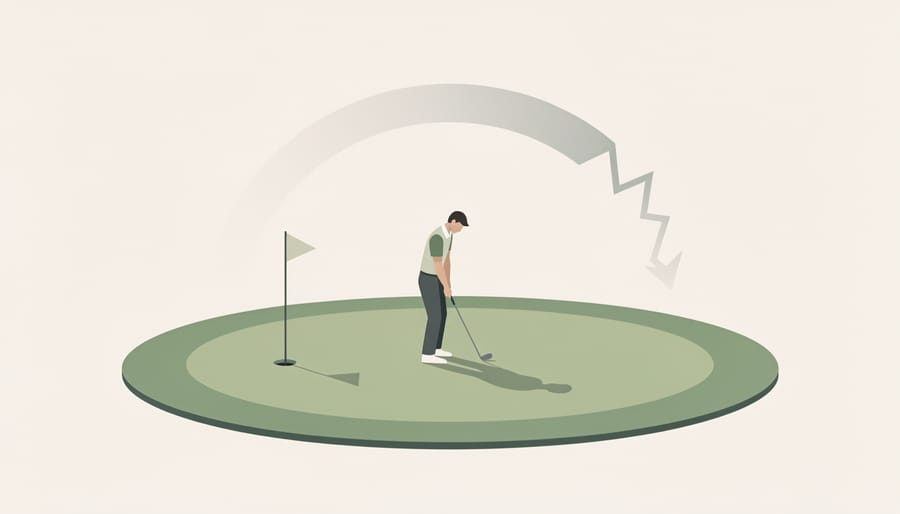
Once you’ve captured your swing on video, the real work begins, identifying what’s happening in your mind at the moment the hitch occurs. Swing Surgeon famously described Barkley’s issue as something “stuck” in his brain, taking over his tempo and creating that exaggerated yip. That mental trigger is the root cause, not just a mechanical flaw you can drill away.
Ask yourself what you’re thinking during the pause. Are you afraid of shanking the ball into the trees? Worried about embarrassing yourself in front of playing partners? Overthinking whether your left elbow is in the right position? Most hitches stem from one of three sources: fear of mishitting, paralysis from overanalyzing mechanics, or pressure to perform. The pause is your brain’s attempt to regain control, but it actually destroys the natural rhythm your body needs.
Write down what crosses your mind right before the stutter. Be honest. That conscious thought, whether it’s “don’t slice” or “remember to rotate”, is your mental trigger. Recognizing it gives you something concrete to address, turning an invisible psychological block into a problem you can solve through deliberate practice and simplified swing thoughts.
Step 3: Simplify Your Swing Thought Process
Once you’ve identified the mental trigger behind your hitch, the next step is to strip away the clutter. Barkley’s journey from severe yips to more fluid motion demonstrates a core truth: overthinking mechanics during the swing is poison. Your brain can’t process five checkpoints while swinging at speed. Pick one simple swing thought, “smooth back” or “turn and finish”, and commit to it entirely. Some golfers find success with a rhythmic count (one-two, or one-and-two) that forces continuous motion instead of a pause.
Practice this singular focus with exaggerated fluidity. Your swing might feel loose, almost sloppy at first. That discomfort is normal when you’re rewiring a pattern your brain has locked in. Make practice swings where you deliberately overdo the smoothness, swinging slower than normal with zero interruption. Hit soft pitch shots on the range while humming or counting aloud. The goal is momentum without hesitation, even if solid contact takes a backseat temporarily. Barkley’s transformation didn’t happen by adding complexity; it came from clearing the mental noise and letting motion flow again. Simplicity beats perfection when you’re fighting a hitch.
Step 4: Use Tempo and Rhythm Drills
Tempo drills help rewire the mental block that caused Barkley’s infamous hitch. Start with the humming drill: hum a simple tune or count “one-two-three” aloud as you swing, forcing your body to match the rhythm without pause. The continuous sound prevents the mental stutter that creates a yip. Next, try swinging with your eyes closed on the range, focusing entirely on the feel of smooth motion rather than ball contact. Your brain can’t overthink mechanics when visual input is removed.
Practice the metronome drill by setting a rhythm, slow backswing, smooth transition, accelerate through, and repeat it ten times without stopping between swings. The key is fluid, unbroken motion. Even if you miss the ball or make poor contact initially, maintain the tempo. Barkley’s transformation from exaggerated yip to more fluid motion came from this kind of deliberate rhythm work.
These drills work best with ample space and repetition. Dedicate entire range sessions to tempo only, not ball striking. The consistent motion must become automatic before you worry about where the ball goes.
Step 5: Gradually Reintroduce Full Swings
Once the tempo drills feel comfortable and your hitch-free motion is consistent through Step 4, resist the urge to grab your driver immediately. Start with short irons, pitching wedge or nine-iron, and make deliberate half-swings, focusing entirely on maintaining that smooth rhythm you’ve built. The goal here isn’t distance; it’s proving to yourself that the fluid motion holds up when you introduce a ball and target. Spend several sessions at this controlled intensity, gradually extending to three-quarter swings as confidence grows. Only when half-swings feel automatic and natural should you move to full swings with mid-irons, then long irons, and finally the driver. This patient progression mirrors how Barkley moved from severe yips to more fluid motion, through deliberate, incremental work rather than forcing immediate results. Rushing this stage risks reintroducing the mental freeze that caused the hitch in the first place.
What PGA TOUR Swing Breakdowns Reveal
The PGA TOUR’s recent video series brought Charles Barkley’s infamous swing back into the spotlight, offering valuable lessons for any golfer battling mechanical issues. Their breakdown videos, including “Breaking down the legendary golf swing of Charles Barkley” and “Charles Barkley’s Golf Swing Through the Years”, document how drastically his motion evolved, transforming from severe yips to more fluid motion over time.
What experts identified reveals crucial insights. Swing Surgeon pinpointed an “exaggerated yip” in Barkley’s swing, describing how something was “stuck” in his brain, hijacking his natural tempo. This mental override created the distinctive hitch that made his swing instantly recognizable. The diagnosis matters because it confirms what many recreational golfers experience: swing problems often start in the mind, not the muscles.
The videos show Barkley’s swing at different stages, demonstrating that even deeply ingrained hitches can improve. Early footage captures the pronounced pause at the top of his backswing, while later clips reveal smoother transitions. This progression illustrates that consistency and targeted practice produce results, even with notorious swing flaws.
For golfers working on similar issues, these breakdowns highlight three key areas. First, wrist hinge mechanics matter, Barkley’s hitch disrupted the natural wrist set and release sequence. Second, mental interference compounds mechanical problems, which is why efforts to simplify your swing thoughts prove critical. Third, tempo disruptions often stem from breakdown in sequencing, sometimes requiring a complete weight transfer reset to restore rhythm.
The legendary status of Barkley’s swing stems not from perfection but from his public struggle with golf’s mental challenges, a battle every golfer understands.
Verification and Next Steps After Working on Your Swing
You’ll know your swing work is paying off when you see four clear signs. First, your ball flight becomes predictable, shots start flying straighter with consistent trajectory, not the wild variation that comes with a hitch. Second, your tempo feels smooth from start to finish, without that telltale pause or stutter that used to creep in at the top of your backswing. Third, you’ll notice growing confidence standing over the ball, free from the mental freeze that once dominated your setup. Fourth, when you review video of your new swing, you’ll see fluid motion instead of the mechanical breakdown that plagued your earlier attempts.
Once these improvements start showing, commit to regular practice sessions to cement the changes. The Lakes Golf Club’s practice facilities give you the ideal environment to groove your refined motion, whether you need focused range work or short game sessions. Book a lesson with a qualified instructor who can identify any remaining rough edges and help you protect your tempo as you add speed back into your swing. Video feedback from a trained eye catches subtle issues before they become ingrained habits.
Next, test your swing under real pressure by playing actual rounds. Practice range success means little until you can repeat the motion with a scorecard in your pocket. Schedule tee times at The Lakes Golf Club to verify your improvements translate to the course, where uneven lies, wind, and scorekeeping create the mental challenges that expose lingering swing demons.
Finally, maintain your mental game work. The yips live in your head as much as your mechanics. Keep using tempo drills, pre-shot routines, and the visualization techniques that helped you break through initially. Improvement is a process, not a destination.
Frequently Asked Questions
Can the yips be completely cured?
The yips can be managed and often significantly improved through deliberate practice and mental game work, though many golfers describe it as an ongoing process rather than a one-time fix. Charles Barkley’s swing evolution from severe yips to more fluid motion shows that meaningful improvement is possible with sustained effort.
How long does it take to fix a swing hitch?
The timeline varies widely depending on the severity of the hitch and how ingrained the pattern has become. Some golfers see improvement within weeks of focused practice, while others need months of consistent work to rebuild their swing rhythm and confidence.
Should I get professional help for a swing hitch?
Working with a qualified instructor can accelerate your progress significantly, especially if the hitch has a strong mental component or if you’ve struggled to diagnose the root cause on your own. A professional can identify specific mechanical or psychological triggers you might miss and tailor drills to your situation.
Is Charles Barkley’s swing still unusual?
While Barkley’s swing has evolved considerably from the exaggerated yip that experts like Swing Surgeon analyzed, recent PGA TOUR videos confirm it remains distinctive. The swing changed drastically through the years, moving from severe stuttering to more fluid motion, though traces of his unique rhythm persist.
Beyond these common questions, remember that swing struggles affect golfers at every level, from NBA legends to weekend players. The journey toward a smoother, more consistent swing requires patience, self-awareness, and the right practice environment. Whether you’re addressing a minor tempo hiccup or a full-blown yip, the principles remain the same: identify the trigger, simplify your thoughts, rebuild rhythm gradually, and verify progress through both practice and play. Facilities that offer comprehensive practice areas alongside quality course conditions give you the dual environment needed to work through mechanical changes and then test them under real playing pressure, completing the improvement cycle that turns range work into on-course confidence.
Charles Barkley’s journey with his golf swing proves that no one, not even a Hall of Fame NBA star, is immune to the mental and mechanical challenges this game presents. If someone of his athletic caliber can struggle with a hitch so severe it became legendary on PGA TOUR videos, then every golfer facing their own swing demons should take comfort. The path forward isn’t about overnight transformation. It’s about patient, deliberate work on both mechanics and mindset.
The lessons from Barkley’s swing apply to golfers at every level: identify the specific issue, simplify your swing thoughts, rebuild rhythm through focused drills, and verify progress in real conditions. Quality practice environments make this work more productive and enjoyable. At The Lakes Golf Club, you’ll find everything needed to tackle these challenges, from our practice facilities and driving range where you can work through tempo drills without distraction, to our professional instruction programs that provide expert guidance on fixing swing flaws. When you’re ready to test your improvements under real playing conditions, our membership options offer regular access to scenic courses that reward consistent practice. Your swing challenges are fixable. Start working through them today.