
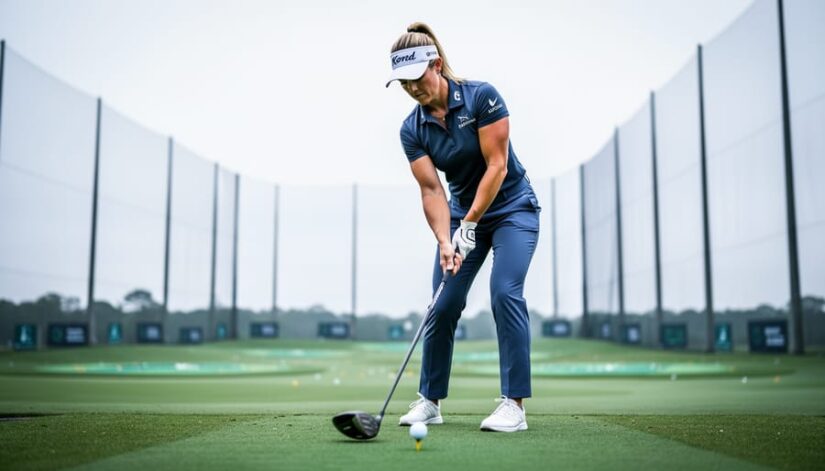
Nelly Korda’s golf swing has evolved into one of the most studied mechanics on the LPGA Tour, and understanding her two primary swing focuses heading into the 2026 season reveals why she maintains her position as World No. 1. The current world’s best player is working on staying “laid off at the top” of her backswing and achieving a more stacked position through impact, technical refinements that allow her to compress the ball with remarkable consistency and control shot shape with precision. These aren’t just professional-level adjustments reserved for tour players. Both concepts translate directly into improvements recreational golfers can implement, whether you’re looking to add distance, improve accuracy, or simply understand what separates elite ball-striking from the average swing.
Korda’s recent equipment change to the TaylorMade Qi4D driver underscores her commitment to optimizing ball speed and shot shaping capability, but the foundation of her success remains in those two swing feels. Being laid off prevents the club from crossing the line at the top, reducing compensations on the downswing. The stacked position through impact, where the upper body stays centered over a stable lower body, creates the compression that produces her impressive stock yardages. What makes these insights valuable is their accessibility: you don’t need tour-level athleticism to benefit from understanding how proper positioning at key moments transforms contact quality and consistency.
The Foundation: Why Nelly Korda’s Swing Stands Out
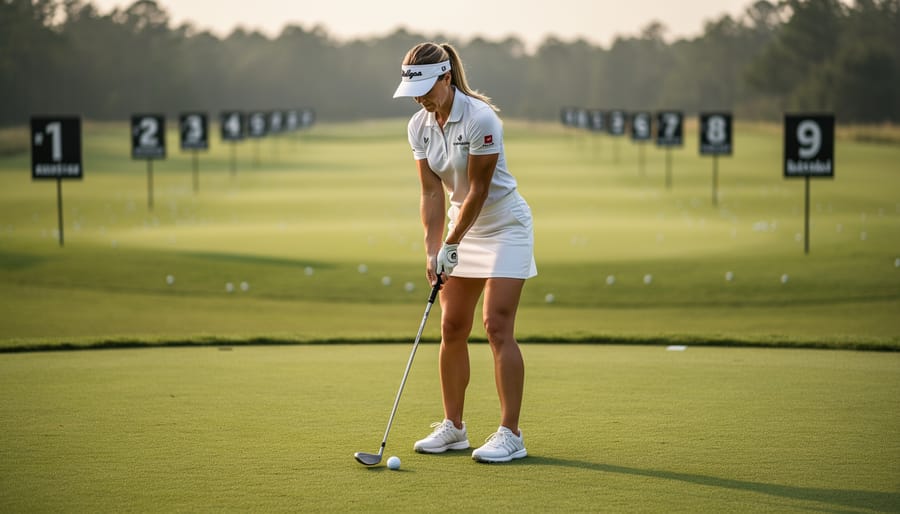
When you watch Nelly Korda step up to the ball, you’re seeing something that takes years to develop but appears effortless. The current World No. 1 and 10-time LPGA Tour winner has built a swing that amateur golfers study not because it’s flashy, but because it’s remarkably effective. Her motion combines athletic power with exceptional control, a balance that separates professional champions from merely talented players.
What sets Korda’s swing apart is its natural rhythm. Growing up in an athletic family, with a former tennis pro father and LPGA sister Jessica, Nelly developed coordination and timing that translate beautifully to golf. Her swing doesn’t feel manufactured or mechanical. Instead, she’s built a fluid, repeatable motion that generates impressive distance without sacrificing accuracy. That repeatability is what catches the eye of instructors and recreational golfers alike.
The power comes not from forcing the club but from sequencing her body correctly. Korda loads into her right side during the backswing, then unwinds smoothly through impact with her hips leading the way. Her tempo stays consistent whether she’s hitting a driver or wedge, which is precisely what makes her swing so reliable under pressure. She trusts the motion because she’s ingrained the same feel thousands of times.
For golfers at The Lakes working on their own games, Korda’s swing offers a valuable lesson: consistency beats complexity. Rather than chasing extra yards through violent effort, she’s refined a swing that produces predictable results. That approach, built on rhythm and repetition, is something every golfer can aspire to regardless of skill level.
The Two Key Feels Shaping Her 2026 Season
Nelly Korda entered the 2026 LPGA Tour season with two specific swing feels guiding her game. These aren’t random technical adjustments, they’re deliberate focuses that help one of the world’s best golfers maintain the consistency that has carried her to 10 LPGA Tour victories and the World No. 1 ranking.
The first feel is being “laid off at the top.” The second involves getting “stacked up” to better cover her shots. If those terms sound technical, don’t worry. They’re actually concepts that translate well to golfers of all levels once you understand what they mean in practice.
- Laid off at the top
- When the club shaft points left of the target at the peak of the backswing, creating a flatter, more controlled position. This helps prevent the club from getting too steep or crossing the line, which can lead to inconsistent ball striking.
- Stacked up
- A position where your upper body stays more centred over the ball through impact rather than hanging back. This forward pressure allows you to compress the ball better and control your shot trajectory more effectively.
For Korda, being laid off at the top means her backswing reaches a position where the club shaft isn’t crossing over an imaginary line extending from the ball through her hands. Think of it as keeping the club more in front of you rather than wrapping it behind. This subtle shift connects to proper wrist hinge and helps create a more repeatable downswing path.
Getting stacked up addresses the downswing and impact. Instead of the upper body tilting away from the target, a common amateur mistake that leads to thin or heavy contact, Korda focuses on staying forward, covering the ball with her chest and shoulders. This creates the compression that produces consistent distance and trajectory.
These aren’t massive overhauls. They’re small refinements that a world-class player uses to sharpen what already works brilliantly. The lesson for recreational golfers is equally valuable: sometimes the best improvements come from clarifying one or two specific feels rather than rebuilding your entire motion.
Power Meets Precision: Understanding Her Distance Control

Nelly Korda’s exceptional distance control doesn’t come from swinging harder than everyone else. It comes from knowing her numbers with precision and building a swing that produces them reliably. When you watch her on tour, you’re seeing someone who hits her 7-iron a consistent stock yardage, round after round, because her mechanics support repeatability first and power second.
Her approach offers a critical lesson for golfers at every level: chasing maximum distance on every shot creates inconsistency, while dialing in your stock yardages builds the foundation for lower scores. Korda knows exactly how far each club carries, and she trusts that distance because her swing produces the same ball flight pattern through proper sequencing and efficient weight transfer.
What makes her swing mechanics translate to such reliable distance control? It starts with tempo. Her rhythm remains constant whether she’s hitting an 8-iron or launching a driver, which means her club speed stays predictable. That consistency at the top position we discussed earlier, combined with how she stacks up through impact, creates a repeatable delivery that produces the same spin rates and launch angles shot after shot.
For recreational golfers, this is where the real opportunity lies. Instead of trying to squeeze ten more yards out of your 6-iron, focus on knowing your actual carry distance with each club and hitting that number consistently. Spend a session at the practice facility hitting twenty balls with your 7-iron, noting where most shots land rather than celebrating the one perfect strike that flew farther than usual.
When you prioritize consistency over occasional heroics, you’ll find yourself choosing the right club more often, avoiding trouble, and ultimately posting better scores on courses like The Lakes where strategic placement matters more than raw power.
Equipment Choices That Complement Her Swing

Korda’s decision to switch to the TaylorMade Qi4D driver for 2026 reveals an important truth about equipment that many recreational golfers overlook. She didn’t chase the latest release simply because it was new. The Qi4D offered her three specific improvements: more ball speed, a shape at address that looked better to her eye, and easier shot shaping to match her evolving swing mechanics.
That third benefit matters most. As Korda refined her focus on being laid off at the top and getting stacked up through impact, she needed a driver that complemented those adjustments rather than fighting them. The Qi4D’s design characteristics matched her swing path and release pattern, making it easier to execute the shots she visualized.
Too many golfers approach equipment backward. They see a tour player’s club in the bag and assume copying that choice will produce similar results. But Korda’s switch illustrates the opposite principle: find equipment that works with your swing, not against it.
At The Lakes, this means being honest during your next fitting or club purchase. Does that driver genuinely suit your swing speed, attack angle and typical miss pattern? Or does it just look impressive in the bag? A club that matches your mechanics will feel easier to hit consistently, build confidence and produce better results than one chosen for brand prestige alone.
The right equipment won’t fix fundamental swing flaws, but it can absolutely make your good swings more effective and your mishits more forgiving.
Three Swing Elements You Can Practice at The Lakes
The next time you visit The Lakes practice facilities, bring along three specific elements from Nelly Korda’s swing that translate beautifully to any skill level. You don’t need tour-level athleticism to work on these fundamentals, and the improvement you’ll see in your ball striking makes them well worth the focused practice time.
1. Developing a Smooth, Athletic Rhythm
Korda’s swing looks effortless because she maintains consistent tempo from start to finish. Most recreational golfers rush the transition or decelerate through impact, creating inconsistency. At The Lakes driving range, dedicate a bucket of balls to rhythm work. Start with half swings at 50 percent speed, counting “one” on the backswing and “two” through impact. The key is making both counts equal in duration. Gradually increase to three-quarter swings, then full swings, maintaining that same tempo ratio. Your distance will actually increase as your timing improves, even though you’re not swinging harder.
2. Finding Your Position at the Top
Korda’s focus on being “laid off at the top” means her club points slightly left of target at the peak of her backswing, preventing an over-the-top move. You can work on this by making practice swings where you pause at the top and check your position. The club shaft should be roughly parallel to your target line or slightly inside it. If you tend to slice, this laid-off position will help you fix your swing path. Practice this position with alignment sticks or simply by stopping at the top and looking back at where your club points.
3. Covering the Ball Through Impact
The concept of getting “stacked up” and covering shots means maintaining your spine angle and staying centered over the ball through impact rather than hanging back. Here’s a simple drill sequence:
- Place a headcover about six inches outside your ball on the target line
- Make practice swings focusing on keeping your head steady and chest facing the ball until after impact
- Hit balls trying to brush the headcover with your follow-through, which ensures you’re moving forward through the shot
- Check your finish position, where your chest should face the target and your weight should be almost entirely on your front foot
This forward motion creates the compression and consistent contact that makes Korda’s ball striking so reliable. Work through these drills at your own pace, and you’ll notice cleaner contact and better trajectory control, especially with your mid-irons and wedges where precision matters most on The Lakes’ well-protected greens.
The Mental Side: Confidence Through Consistency
Korda’s consistency at the highest level of professional golf stems from something deceptively simple: she trusts her swing thoughts. By narrowing her focus to just two key feels, being laid off at the top and getting stacked up through impact, she has created mental anchors that quiet the noise during competition. This approach transforms technical mechanics into instinctive actions, allowing her to play with freedom rather than overthinking each shot.
Amateur golfers can adopt this same philosophy by identifying one or two swing thoughts that genuinely work for their game. Whether it is maintaining a smooth tempo, feeling the weight shift, or developing a single-plane swing path, the specific focus matters less than committing to it consistently. Repeating the same motion, round after round, builds the trust that allows you to execute under pressure.
This mental discipline becomes especially valuable on challenging courses where doubt can creep in. When you have practiced a specific feel enough times that it becomes automatic, you spend less energy second-guessing your mechanics and more energy reading the course and executing your strategy. Confidence does not come from hitting perfect shots every time. It comes from knowing your swing will respond the same way, even when the stakes feel high or the conditions test you.
Studying Nelly Korda’s swing offers a masterclass in blending power with precision, but the real value lies not in copying her moves exactly. Instead, let her approach inspire you to discover your own reliable swing thoughts and consistent rhythm. Whether you’re working on being quieter at the top or improving how you cover the ball through impact, the goal is finding feels that work for your game and body.
The Lakes provides the perfect environment to put these insights into practice. Our scenic fairways and well-maintained practice facilities give you the space to experiment, refine, and build confidence in your swing without pressure. Take what resonates from Korda’s focus on consistency and equipment that matches her swing, then translate those lessons into your own game.
Golf improvement isn’t about radical overhaul. It’s about small, thoughtful adjustments that compound over time. Bring one swing thought to your next round here, work on it during a practice session, and notice how even subtle changes can transform your ball striking. The journey matters as much as the destination, especially when you’re enjoying it surrounded by the natural beauty that makes The Lakes special.